A talk in one sitting
Science & Magic
The Science of Attention and how Magic exploits it.

A talk in one sitting
The Science of Attention and how Magic exploits it.
Before we start
Two things are true about your attention:
01 You notice far less than you think you do.
02 You have far less capacity than you think you have.


They pay it for boring marketing reasons like brand awareness but they also pay it for the fact that while you're looking at one thing, you are not looking at anything else. That property and exclusivity is exactly what a magician exploits.
Act one
It isn't a memory problem and it isn't a failure of effort. It's that two things you assume are the same thing are, in fact, completely different operations.
Seeing ≠ noticing
Memory ≠ perception
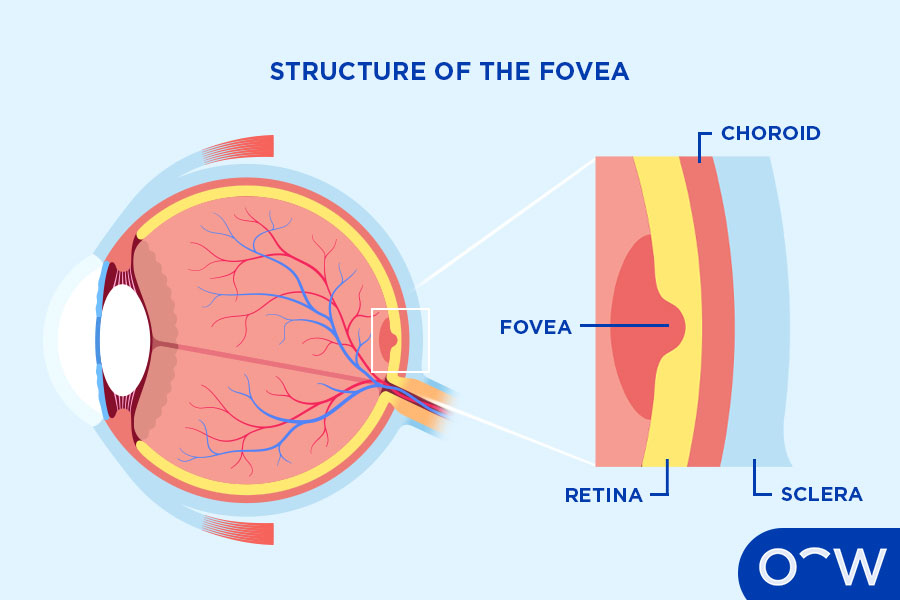
Our built in hardware, our brains and our eyes are more limited than you might expect. The fovea is a tiny pit in the center of the retina. It provides your sharpest and highest visual acuity, meaning it lets you see fine details and bright colors clearly. Hold your thumb up at arm's length: that is roughly the region you see in genuine detail. Your fovea covers about two degrees of visual angle. Outside it, acuity falls away fast, and words sitting next to other words become close to unreadable.
Eyes on the cross.
Two teams are passing a basketball around — one in white shirts, one in black. Count the passes made by the team in white.
In the original experiment by Simons & Chabris, 46% of participants did not see the gorilla the first time.
Simons & Chabris, 1999. One of the most reliably replicated results in the field.
Act two
How much can we work on at once? The answer is close to one thing.
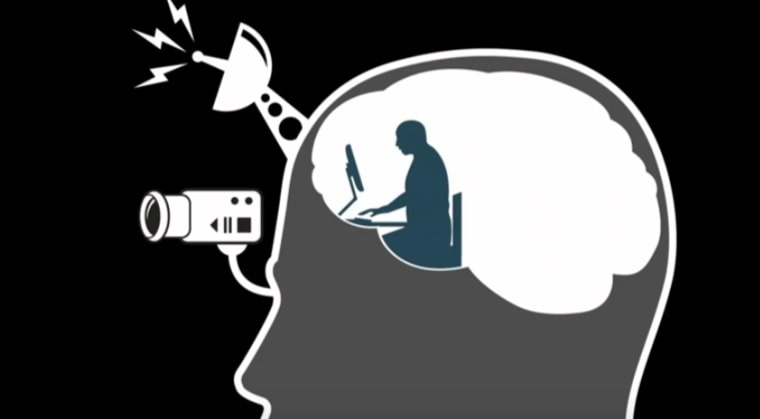
Every one of these is a job for the same operator. Not a parallel process — a job in the same queue as the thing you were actually trying to do.
“We've all heard it takes about 20 minutes to get back into a task after an interruption. I wanted to know where that number comes from — and it turns out it doesn't mean what we all think it means.”
Gloria Mark's team at UC Irvine (2005, 2008) followed knowledge workers in situ. The figure everyone quotes is about 23 min 15 s. But read what it measures: the time until the person returns to the original task at all — not the time to regain focus. In between, they typically visit two other tasks. It measures drift, not warm-up.
Interrupted work often got finished faster — but with measurably higher stress, frustration, time pressure and effort. People compensate.
You don't lose the time. You lose the slack.
Act three
Put those two facts together — a narrow spotlight, and one operator behind it — and you have a system that can be steered. Which is exactly what a magician does.
It isn't pointing over your shoulder and shouting “look over there.” That's not misdirection, that's a request — and requests can be declined.
Misdirection is directing attention somewhere meaningful. Somewhere it wants to go anyway. You aren't tricked into looking away; you're given something better to look at, and you go willingly. Done properly, you never experience being redirected at all — which is why it survives you knowing it's happening.
Your attention went inward. For a second or two you were retrieving, not perceiving, and the outside world was getting a fraction of the service it was getting a moment ago.
That gap is an opportunity for a magician to manipulate and it's also the door into the cognitive science.
| Term | What it does | Think of it as |
|---|---|---|
| Executive attention | Decides what gets the spotlight. | The stage manager |
| Working memory | Holds what you're actively thinking about. | A sticky note, or a whiteboard |
| Task switching | Changes from one job to another, and charges you a reset cost each time. | Changing gears |
| Dual-task interference | Two jobs competing for the same mental resource at the same moment. | Two people trying to use one keyboard |
All of this counts as work, and takes effort.
Macknik, Martinez-Conde & Robbins, Nature Reviews Neuroscience, 2008. Neuroscientists sat down with working magicians — including a professional pickpocket — and found the profession had reverse-engineered all of it empirically, through audience testing, long before anyone measured it in a lab. Centuries of A/B testing on live humans.
Here are five of the techniques they use to take advantage of it:
Look where you want them to look. Following someone’s gaze is close to involuntary — it hijacks a social reflex you have been running since before you could talk.
what it looks likeThe steal usually happens while the magician is looking at your face, not at their own hands. You look wherever they look — and if they look at you, you look back, which takes your eyes off the table entirely. Tony Slydini built a career on spectators politely meeting his eye while objects went into his lap.
That one went straight — and your eyes were usually already at the end, waiting for it. A straight line lets your eye jump to the destination and sit there, so the middle of the trip goes unwatched. The middle of the trip is where the work happens.
That one arced — and this time your eyes usually stay with the dot instead of running ahead of it. A curved path gives the spotlight something to ride. Which means the hand doing the work becomes the one thing you're guaranteed to be watching, for as long as it keeps curving.
An arcing hand drags the attentional spotlight along its path. A straight line lets the eye jump ahead to the endpoint and wait — leaving the middle unwatched.
what it looks likeWatch the hand you’re invited to follow: it travels in arcs. The hand doing the work moves in short straight lines, or doesn’t move at all. A performer reaching into a pocket on a curve is holding your gaze on the journey. Reaching on a line is handing it back.
These need no demonstration, because they have all been done to you — usually by someone who wasn't even a magician.
A handshake, a question, your name. Cognitive load is misdirection — you don't need sleight of hand if the person is busy being polite.
what it looks likeApollo Robbins takes watches during handshakes — not because the handshake hides the hand, but because being polite is a task, and you only have one channel to run it on. He'll often hand something back to you at the same moment. Gratitude is a heavier load than suspicion.
The trick has already succeeded down several branches. Audience management, not dexterity.
what it looks likeEquivoque. “Pick two of these three.” If you pick the two they want, those are the ones you'll use. If you don't, those are the ones you'll discard. The wording changes; the ending never does. You made a completely free choice and it made no difference at all. Your brain also has to do the work to make a decision.
The trick already happened, well before the moment everyone believes it did. Their memory searches the wrong window and finds nothing.
what it looks likeAsk someone afterwards when the coin vanished and they'll point at the moment the hand opened. It left several beats earlier, during a laugh or a turn of the head. Magicians call that gap the off-beat and do the work inside it, because a trick is only scrutinised from the moment it's announced.
The same five, in your pocket
Not ten tips
The bottleneck is real and it isn't going anywhere. But nearly all of these are about protecting the operator's queue rather than trying to make him faster.
There's a clean lab test for the tax you pay every time you change mental rules. Same stimulus, same two keys, only the rule changes — and you can see the switch coming. Rogers & Monsell, 1995. Ninety seconds, and you get your own number in milliseconds.
repeat trial · switch trial
Opens the standalone test — best on a laptop, where you can rest your fingers on F and J. Works on a phone too. Nothing is sent anywhere; the result is yours to screenshot.
Coda
On the bill tonight